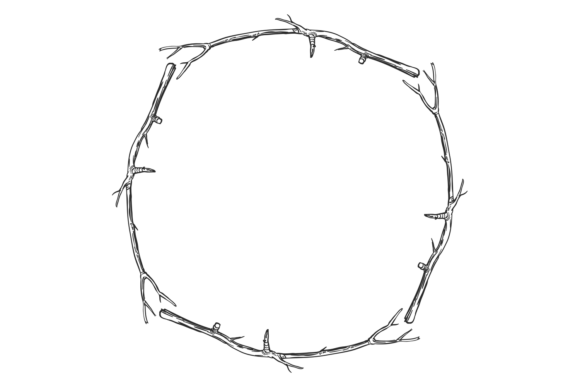
Evaluating the Round Dry Stick Border: A Versatile Decorative Wooden Frame Asset
In the landscape of digital design and print production, the distinction between a functional layout and a compelling visual narrative often comes down to subtle framing elements. The Round Dry Stick Border, specifically the decorative wooden frame variant isolated on a white background, represents a niche yet highly practical asset for creators seeking organic texture without the clutter of complex backgrounds. This resource, typically available in vector formats like EPS and SVG alongside high-resolution raster options such as JPG and transparent PNG, serves as a bridge between rustic aesthetics and modern design efficiency.
For professionals ranging from graphic designers to small business owners, understanding the utility of this specific border type is essential. It is not merely a clip-art element; it is a structural tool that defines space, guides the viewer's eye, and adds a tactile quality to digital interfaces or printed materials. The term "dry stick" implies a specific texture—wood that is weathered, matte, and free from the gloss of varnish or the vibrancy of fresh paint. This characteristic makes it uniquely suited for projects requiring an earthy, grounded, or vintage feel.
Key Characteristics and Technical Specifications
The primary value proposition of the Round Dry Stick Border lies in its format versatility and textural authenticity. When sourced as a vector file (EPS or SVG), the asset offers infinite scalability. This means a designer can apply the border to a small social media graphic or expand it for a large-format trade show banner without losing line definition or texture detail. The mathematical paths defining the wood grains and irregularities of the sticks remain crisp at any size.
Conversely, the raster versions (JPG and transparent PNG) cater to users who may not have vector editing software but still require high-quality integration. The inclusion of a transparent PNG is particularly critical. It allows the wooden frame to be overlaid directly onto photographs, colored backgrounds, or textured papers without the unsightly white box that often accompanies lower-quality image assets. The isolation on a white background in the source files ensures that manual extraction is possible if a transparent version is not immediately available, though professional packages usually include both.
The "round" configuration distinguishes this asset from standard rectangular frames. Circular or oval compositions are inherently more dynamic; they break the rigid grid of most web layouts and document structures. This shape encourages a focal point in the center, making it ideal for portraits, product highlights, or logos. The dry stick construction adds a layer of complexity, as the individual pieces of wood must be arranged to form a cohesive circle, often overlapping at the corners or ends to create a sense of handcrafted assembly.
Practical Applications Across Industries
The versatility of the decorative wooden frame extends across various sectors, each leveraging the asset for different psychological and aesthetic effects.
- Wedding and Event Planning: Invitations and save-the-date cards frequently utilize rustic themes. A round dry stick border provides an immediate contextual cue of nature and simplicity, aligning perfectly with barn weddings or outdoor ceremonies.
- Educational Materials: Teachers and curriculum developers often need to soften the sterile look of worksheets. Using a wooden frame around a central diagram or text block can make the content feel more approachable and less institutional.
- Hospitality and Food Service: Menus for farm-to-table restaurants or coffee shops benefit from the organic texture. It reinforces brand messaging related to freshness, natural ingredients, and artisanal preparation.
- Digital Marketing: Bloggers and social media managers use these borders to create consistency in their feed. A circular frame can turn a standard product shot into a branded badge or featured post.
For entrepreneurs and freelancers, the ability to quickly deploy such an asset saves significant time. Instead of photographing actual sticks, arranging them, lighting them, and editing the photo, a pre-made asset allows for instant iteration. This efficiency is crucial when testing different design concepts for client approval.
Performance in Real-World Workflows
Integrating the Round Dry Stick Border into a workflow requires consideration of how it interacts with other design elements. In terms of usability, the asset performs best when there is sufficient contrast between the wood tones and the background. Since dry wood typically ranges from light beige to medium gray-brown, placing it against a dark background may require a drop shadow or an outer glow effect to ensure visibility.
Consistency is another factor. High-quality assets maintain uniform lighting and shadow direction within the frame itself. If the shadows on the sticks suggest a light source from the top left, but the rest of the design implies light from the bottom right, the composite image will look disjointed. Professional users should evaluate the lighting logic of the specific asset they download to ensure it matches their project's environment.
Furthermore, the flexibility of the round shape allows for creative cropping. Designers can place the border over a larger image and use a clipping mask to reveal only the portion of the photo inside the circle, effectively creating a custom-shaped image container. This technique is widely used in magazine layouts and modern web design to break up rectangular monotony.
Quality and Long-Term Value
The long-term value of acquiring a high-fidelity decorative wooden frame lies in its reusability. Unlike trend-specific graphics that may look dated within a year, natural textures like wood possess a timeless quality. A well-executed dry stick border can remain relevant in a brand's toolkit for years.
However, not all assets are created equal. Users should scrutinize the resolution of JPG files to avoid pixelation upon printing. For professional print jobs, the vector EPS or SVG formats are non-negotiable for ensuring sharp edges. Additionally, the complexity of the wood grain matters. A flat, single-color brown outline lacks the depth of a texture-rich dry stick border. The latter conveys a sense of premium quality and attention to detail that resonates with audiences accustomed to high-production values.
Reliability also extends to the file organization. A comprehensive package that includes multiple file types demonstrates a creator's understanding of diverse user needs. It eliminates the friction of converting files or hunting for alternative formats later in the project lifecycle.
Limitations and Considerations
While the Round Dry Stick Border is a powerful tool, it is not a universal solution. Its rustic nature may clash with corporate, high-tech, or minimalist modern brands that rely on sleek lines and metallic finishes. In such contexts, the organic irregularity of the wood might appear out of place or unprofessional.
Moreover, overuse can dilute its impact. If every page of a brochure or every post in a social media series features the same heavy wooden frame, the design can become visually exhausting. It is most effective when used sparingly to highlight key information or special features. Designers must exercise restraint, ensuring the frame supports the content rather than competing with it.
There is also the consideration of color grading. While the "dry stick" aesthetic implies a desaturated, natural palette, some projects may require color manipulation to match specific brand guidelines. Vector formats allow for easy recoloring, but raster images may require more advanced photo editing skills to shift hues without losing texture detail.
Final Recommendations for Creators
For those evaluating whether the Round Dry Stick Border fits their current needs, the decision should hinge on the desired emotional response of the audience. If the goal is to evoke warmth, tradition, nature, or craftsmanship, this asset is an excellent choice. It offers a ready-made solution that balances aesthetic appeal with technical functionality.
When selecting a specific file, prioritize packages that offer both vector and high-resolution raster options. This ensures maximum flexibility regardless of the final output medium. Test the transparent PNG against your typical background colors to verify contrast and readability. Finally, consider the scalability of your project; if you anticipate needing the border in vastly different sizes, the SVG or EPS file is the only safe bet.
In conclusion, the decorative wooden frame isolated on a white background is more than a simple embellishment. It is a strategic design element that, when used with intention, can elevate the perceived value of content. By understanding its characteristics, limitations, and optimal applications, professionals can leverage this resource to create more engaging, textured, and memorable visual communications. Whether for a wedding invitation, a restaurant menu, or a digital blog header, the round dry stick border remains a reliable staple in the creative toolkit.