Evaluating the Storm Wave Decorative Border: A Seamless Vintage Design Asset
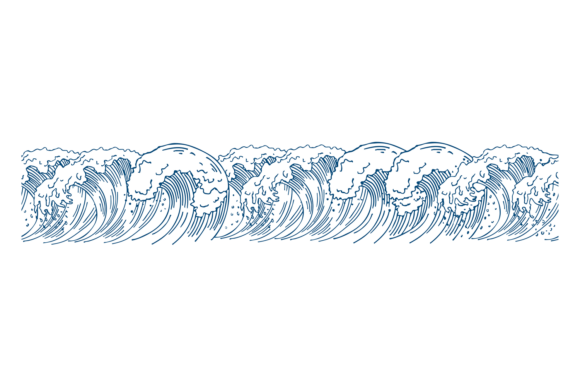
In the realm of graphic design and digital illustration, the selection of boundary elements plays a critical role in defining the aesthetic tone of a project. The Storm Wave Decorative Border. Seamless V represents a specific category of these assets: a vintage-inspired, hand-drawn motif designed to create continuous framing or separation within a layout. This asset is typically distributed as a vector file (EPS, SVG) alongside raster formats (JPG, transparent PNG), isolated on a white background to facilitate easy integration. For designers, illustrators, and content creators, understanding the utility, limitations, and ideal applications of this specific border style is essential for making informed procurement and implementation decisions.
Defining the Asset and Its Characteristics
The term "Storm Wave" refers to the visual subject matter of the border—a stylized representation of ocean swells, often characterized by curling crests and dynamic lines that suggest movement and turbulence. The designation "Seamless V" indicates that the pattern is engineered to tile horizontally without visible breaks or discontinuities. When repeated, the end of one segment aligns perfectly with the beginning of the next, allowing the user to extend the border across any width, from a small business card to a large website banner.
The "vintage drawing" aspect implies an artistic style reminiscent of 19th-century engravings or early 20th-century nautical charts. This aesthetic relies on line weight variation, cross-hatching, and organic imperfections that distinguish it from modern, geometric vector art. The availability of the file in multiple formats addresses different technical needs: EPS and SVG files allow for infinite scalability without loss of quality, making them suitable for large-format printing, while JPG and transparent PNG options offer immediate usability for web graphics and presentations where vector editing software is not available.
Reasons for Interest and Strategic Benefits
Professionals evaluating the Storm Wave Decorative Border. Seamless V are often driven by a need to evoke specific thematic associations. The primary benefit of this asset is its ability to instantly establish a nautical, maritime, or historical context. For projects related to marine biology, coastal tourism, sailing events, or historical fiction, this border serves as a visual shorthand that reinforces the subject matter without requiring custom illustration.
From a workflow perspective, the seamless nature of the design offers significant efficiency. Rather than stretching a single image—which can distort the artwork and degrade the line quality—designers can duplicate the pattern along an axis to fit exact dimensions. This preserves the integrity of the hand-drawn lines. Furthermore, the inclusion of a transparent PNG version eliminates the need for manual background removal, a task that can be particularly tedious with intricate line art containing many small gaps.
The vector formats (EPS and SVG) provide additional flexibility. Users can modify the stroke color to match brand guidelines, adjust the line weight for different print resolutions, or even deconstruct the path to isolate specific wave elements for use as standalone icons. This adaptability makes the asset a versatile component in a broader design system rather than a static, one-use image.
Tradeoffs and Practical Considerations
While the Storm Wave Decorative Border. Seamless V offers distinct advantages, it is not universally applicable. A primary consideration is the stylistic mismatch that can occur in ultra-modern or minimalist designs. The intricate, textured lines of a vintage engraving style may clash with flat design principles, bold sans-serif typography, or high-contrast neon color palettes. In such contexts, the border may appear dated or visually noisy, detracting from the clarity of the message.
Another factor involves the complexity of the line work. Vintage-style illustrations often contain fine details and tight spacing between lines. When scaled down significantly—for instance, for mobile screen headers or small social media graphics—these details may merge, causing the image to look muddy or illegible. Designers must test the legibility of the border at their intended output size. If the final application requires extreme reduction, a simplified vector alternative with thicker strokes might be more appropriate.
Additionally, the "isolated on white background" description for the JPG version necessitates attention during the compositing process. If the final design background is not white, the user must utilize the transparent PNG or vector versions to avoid unsightly white boxes around the waves. Relying on the JPG for non-white backgrounds would require time-consuming masking operations that negate the convenience of the asset.
Ideal Use Cases and Situational Fit
This decorative border is a strong fit for projects where atmosphere and tradition are paramount. It excels in packaging design for artisanal sea salts, craft beers, or soaps that wish to convey a sense of heritage and natural ingredients. In publishing, it serves effectively as a chapter divider in novels set at sea or as a frame for certificates and awards related to maritime achievements.
Web designers may find value in using the seamless pattern as a section divider on landing pages for cruise lines, aquariums, or weather services. The horizontal flow of the waves naturally guides the viewer's eye across the screen, creating a subtle rhythm that breaks up text-heavy content without being overly distracting. Because the pattern is seamless, it adapts responsively to different screen widths, maintaining its structural integrity on both desktop and mobile devices when implemented correctly via CSS background properties.
When to Consider Alternatives
There are scenarios where seeking an alternative to the Storm Wave Decorative Border. Seamless V is advisable. If the project demands a photorealistic depiction of water, a vector line drawing will likely feel too abstract; in this case, high-resolution photography or 3D rendered fluids would be superior choices. Similarly, if the design requires animation, a static JPG or EPS file may not be the most efficient starting point. While vectors can be animated, a purpose-built motion graphic asset or a sequence of frames designed specifically for movement might yield smoother results with less preparation time.
Furthermore, if the target audience is strictly contemporary youth markets that respond better to glitch art, neon gradients, or abstract geometry, the vintage nautical theme may fail to resonate. In these instances, a modern, geometric wave pattern or a fluid gradient border would align better with current visual trends and audience expectations.
Decision-Making Insights for Selection
Selecting the right border asset ultimately depends on aligning the visual language of the graphic with the communicative goals of the project. When evaluating the Storm Wave Decorative Border. Seamless V, creators should ask three key questions: Does the vintage aesthetic support the brand narrative? Will the line detail remain clear at the smallest required display size? Is the seamless functionality necessary for the layout structure?
If the answer to these questions is affirmative, this asset provides a robust, flexible solution that balances artistic charm with technical utility. The availability of multiple file formats ensures that whether the output is a massive billboard or a digital thumbnail, the designer has the appropriate tool for the job. However, if the project prioritizes stark minimalism or photorealism, the distinctive character of this vintage wave border may prove to be a stylistic hindrance rather than an enhancement. By carefully weighing these factors, designers can ensure that their choice of decorative elements enhances rather than complicates the final visual composition.