Intricate Vintage Decorative Laser Cut Designs
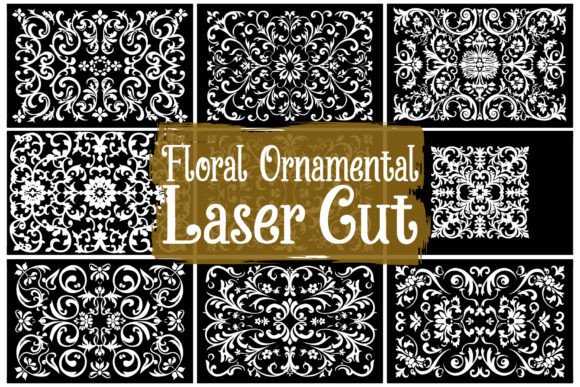
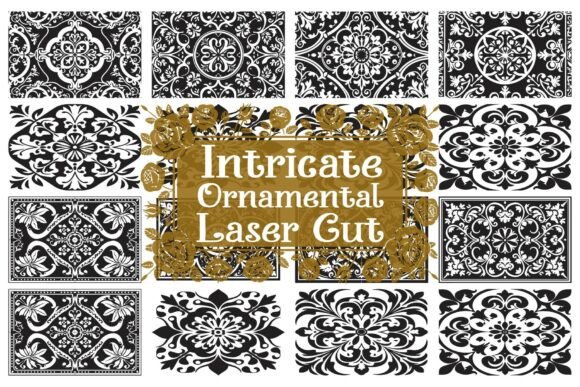
The allure of vintage aesthetics lies in their ability to evoke nostalgia while adding a layer of sophistication to modern creations. When you incorporate intricate vintage decorative laser cut patterns into your work, you are tapping into a rich tradition of ornamental design that has been refined over centuries. These designs are not merely shapes; they are complex arrangements of floral motifs, swirling vines, and delicate geometric details that require precision to execute correctly. Whether you are working with wood, acrylic, paper, or metal, the quality of your source file determines the final outcome. A high-quality bundle, such as one featuring twelve unique ornamental floral panels available in SVG, PNG, JPG, and EPS formats, serves as a foundational tool for a wide array of projects ranging from home décor to commercial product lines.
Understanding the Versatility of Ornamental Panels
At its core, an intricate vintage decorative laser cut file is a digital blueprint for physical art. However, its value extends far beyond the machine that cuts it. For a hobbyist using a desktop cutter like a Cricut or Silhouette, these files represent an accessible entry point into creating professional-looking invitations or scrapbook layouts without needing advanced illustration skills. Conversely, for an industrial operator running a large-format CNC router or a high-power Glowforge, these same vectors provide the structural integrity needed for furniture inserts, room dividers, or architectural screening.
The beauty of having multiple file formats—SVG for scalability, EPS for vector editing, and high-resolution PNG or JPG for preview and print—is that it bridges the gap between different workflows. A graphic designer might import the EPS file into Adobe Illustrator to tweak a curve before sending it to a client, while a small business owner might use the PNG directly for marketing mockups. This flexibility ensures that the asset remains useful regardless of the specific software or hardware in your studio.
Priorities for Beginners and Hobbyists
If you are new to the world of digital crafting, your primary concerns likely revolve around ease of use and reliability. Navigating complex software can be daunting, and the last thing a beginner needs is a corrupted file or a design with open paths that cause cutting errors. Intricate vintage decorative laser cut bundles designed for general use often undergo testing to ensure clean nodes and closed paths.
For this audience, the value proposition is time-saving and confidence-building. Instead of spending hours trying to vectorize a low-quality image found online, you can download a ready-to-cut file and focus on material selection and finishing techniques. Imagine creating a set of wedding invitations with elaborate floral borders; having a pre-made, tested design allows you to achieve a high-end look immediately. The learning curve shifts from "how do I draw this?" to "how do I master my machine settings?" which is a much more rewarding progression for a novice.
Professional Standards for Designers and Makers
Experienced creators and freelancers evaluate these assets through a different lens, prioritizing quality, flexibility, and commercial value. A professional cannot afford to deliver a project where the cut lines are jagged or the scale is incorrect. They need files that can be manipulated without losing resolution. The inclusion of EPS and SVG formats is critical here, as these allow for the modification of individual elements. Perhaps a client needs a specific flower removed to fit a logo, or the overall size needs to be adjusted for a custom signage project.
Furthermore, professionals often look for long-term usefulness. A bundle of twelve unique designs offers a repertoire of styles that can be mixed and matched across different client projects. This variety prevents portfolio stagnation and allows a maker to offer diverse options without commissioning custom artwork for every single job. For a laser cutting service provider, owning a library of intricate vintage decorative laser cut patterns means faster turnaround times and the ability to say "yes" to complex aesthetic requests quickly.
Commercial Applications and Business Growth
Small business owners and entrepreneurs view these digital assets as inventory. In the realm of handmade goods, differentiation is key. Using generic, overused designs can make products feel mass-produced, but selecting refined, detailed floral patterns adds a perceived value that justifies higher price points. Whether you are selling wooden coasters, acrylic jewelry, or paper greeting cards, the intricacy of the cut suggests labor and artistry, even if the initial design was sourced from a bundle.
The commercial use license typically associated with these bundles is a vital factor for business planning. It allows entrepreneurs to scale their production without worrying about intellectual property infringements for each item sold. For instance, a boutique specializing in bohemian home décor could use these panels to create a cohesive collection of wall art. The consistency in style across the twelve designs ensures that the collection feels curated rather than random. Additionally, the speed at which these files can be deployed into production workflows supports agility in responding to market trends.
Educational and Creative Exploration
Educators and workshop leaders also find significant utility in these resources. Teaching the principles of vector design, material constraints, and machine operation requires reliable examples. Intricate vintage decorative laser cut files serve as excellent case studies for discussing line weight, kerf compensation, and the relationship between positive and negative space. Students can analyze how the dense floral details interact with the material, learning why certain bridges are necessary to prevent pieces from falling out during the cutting process.
Moreover, these designs inspire creativity by showing what is possible within the medium. They encourage students to deconstruct the patterns, understanding the underlying geometry of vintage ornamentation, and eventually recombine elements to create their own original works. The transition from using pre-made assets to generating custom designs is a natural educational pathway facilitated by having high-quality references.
Making the Right Choice for Your Projects
Ultimately, deciding whether an intricate vintage decorative laser cut bundle fits your needs depends on aligning the asset's capabilities with your specific goals. If your priority is rapid prototyping for a client presentation, the availability of instant-download formats like PNG and JPG allows for quick visualization. If your goal is to produce durable, physical goods, the vector precision of SVG and EPS ensures that your laser cutter follows the path exactly as intended, minimizing material waste.
Consider the scope of your upcoming projects. Are you looking for a one-off solution for a single invitation suite, or do you need a versatile library for a year's worth of product development? The diversity within a twelve-design pack caters to both scenarios, offering enough variation to keep your output fresh while maintaining a consistent vintage theme. By evaluating your current skill level, your equipment capabilities, and your end-user expectations, you can determine if this type of ornamental collection is the missing piece in your creative toolkit. Whether you are a weekend crafter or a full-time fabrication specialist, the right digital assets empower you to focus on the art of making rather than the mechanics of drawing.