Evaluating Decorative Floral Pattern Laser Cut Designs for Modern Craft Projects
For crafters, designers, and small business owners, selecting the right digital assets is a critical step in the production workflow. Among the vast array of available resources, a decorative floral pattern laser cut design stands out as a versatile solution for projects requiring intricate detail and structural integrity. Unlike standard clip art or simple silhouettes, these patterns are engineered specifically for material removal processes, balancing aesthetic appeal with the physical limitations of cutting machinery. Understanding the nuances of these files—ranging from vector scalability to format compatibility—is essential for anyone looking to integrate ornamental artistry into weddings, home décor, or personalized gifting.
Defining the Distinctiveness of Ornamental Laser Files
A decorative floral pattern laser cut file is not merely an image of a flower; it is a technical blueprint optimized for precision tools. What makes this category distinct is the deliberate arrangement of positive and negative space. In traditional printing, dense ink coverage is often desirable. However, in laser cutting, vinyl weeding, or paper crafting, the "cut lines" define the final product's durability and visual weight. These designs typically feature interconnected elements that prevent delicate petals or leaves from detaching during the cutting or handling process.
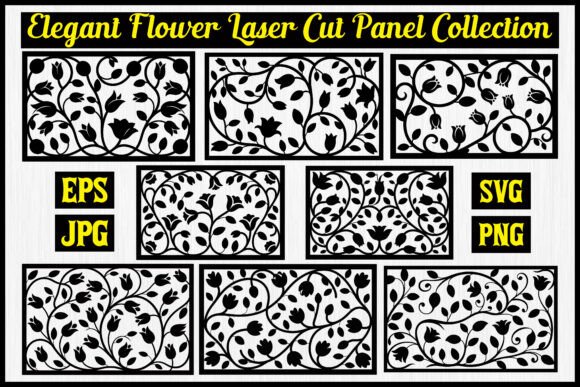
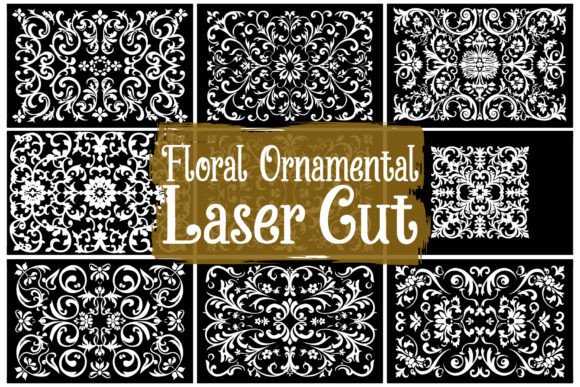
The collection of nine beautifully crafted designs mentioned in many premium bundles exemplifies this approach. By combining delicate floral motifs with robust ornamental frameworks, these files ensure that the final output maintains its shape whether it is cut from 3mm plywood, cardstock, or adhesive vinyl. The distinction lies in the vector topology. High-quality files in this category are constructed from clean, closed paths (often totaling over 100 vector shapes per design) that allow software to interpret cut lines without errors, bridging gaps, or creating unnecessary nodes that could slow down a machine.
Format Comparison: SVG, EPS, PNG, and JPG
When evaluating a design bundle, the included file formats dictate its usability across different platforms. A comprehensive package usually includes SVG, EPS, PNG, and JPG files, but understanding when to use each is vital for efficient workflow.
- SVG (Scalable Vector Graphics): This is the preferred format for web-based cutting machines like Cricut and Silhouette. SVGs retain editability, allowing users to ungroup elements, change colors, or resize the design without losing resolution. For a decorative floral pattern laser cut project, SVG ensures that the curve data remains smooth regardless of scaling.
- EPS (Encapsulated PostScript): Ideal for professional graphic design software such as Adobe Illustrator or CorelDRAW. EPS files are fully editable vectors, making them the best choice for users who need to modify anchor points or integrate the floral pattern into a larger, complex layout before sending it to a high-power industrial laser cutter.
- PNG (Portable Network Graphics): While raster-based, high-resolution PNGs are useful for previewing designs, creating mockups, or using in sublimation printing where cutting paths are not required. They offer transparency, which is helpful for layering visuals in presentation decks.
- JPG (Joint Photographic Experts Group): Generally used for reference images or non-transparent backgrounds. In the context of laser cutting, JPGs serve primarily as visual guides rather than functional cutting files.
The trade-off here is between convenience and control. Raster formats (PNG/JPG) are universally viewable but cannot be scaled up indefinitely without pixelation. Vector formats (SVG/EPS) require specific software knowledge but offer infinite scalability and editability. For a user deciding between bundles, the presence of both vector and raster formats indicates a resource designed for flexibility across different skill levels and equipment types.
Application Suitability: When to Choose This Style
Not every project benefits from the complexity of an ornamental floral pattern. These designs shine in scenarios where texture and light play are central to the aesthetic. For instance, in wedding invitations, a laser-cut floral overlay adds a layer of sophistication that flat printing cannot achieve. The interplay of light through the cutouts creates shadows and depth, elevating the perceived value of the stationery.
Similarly, for home décor such as wall art or lamp shades, these patterns provide a balance between opacity and translucency. A solid wooden panel blocks light entirely, whereas a decorative floral pattern laser cut from thin wood or acrylic allows light to filter through, creating ambient lighting effects. In contrast, for projects requiring bold, high-contrast visibility from a distance (such as outdoor signage), simpler, thicker fonts and shapes might be more appropriate, as intricate floral details can get lost or become fragile in large-scale outdoor applications.
For scrapbooking and paper crafts, the delicate nature of these designs allows for layered dimensionality. Users can stack multiple layers of cardstock in varying colors to create a 3D effect. However, this requires a machine capable of fine detail work. If a crafter is working with a basic die-cutting machine that struggles with intricate internal cuts, a simpler floral silhouette might be a more practical alternative to avoid excessive weeding time or material tearing.
Technical Considerations and Material Limitations
Before committing to a specific design, one must consider the material constraints. A decorative floral pattern laser cut design that looks perfect on a screen may present challenges depending on the medium. Thin materials like tissue paper or delicate vellum require designs with wider bridges (the connections between parts) to prevent tearing. Conversely, thick materials like MDF or hardwood may struggle with extremely tight curves unless the laser beam width (kerf) is accounted for in the file preparation.
The "100 vector shapes" metric often cited in premium bundles is a indicator of complexity. More shapes generally mean more detail, but also longer cutting times and higher potential for error if the machine calibration is off. Users should evaluate their equipment's tolerance. A hobbyist laser cutter might handle moderate detail well, while an industrial CO2 laser can manage the finest filigree. If the goal is rapid production for a small business, opting for a design with slightly simplified internals might increase throughput without significantly sacrificing visual impact.
Editing and Customization Potential
One of the significant advantages of acquiring a bundle with editable vector files (EPS/SVG) is the ability to adapt the design to specific needs. Unlike static images, these files allow users to:
- Modify Color and Fill: Easily change the visual representation in design software to match brand palettes or event themes before cutting or printing.
- Resize Without Quality Loss: Scale a small gift tag design up to a large door hanger or wall mural seamlessly.
- Combine Elements: Extract specific flowers or leaves from the main composition to create unique arrangements or borders, effectively multiplying the utility of the original nine designs.
This editability is crucial for personalization. A wedding planner might take a standard floral motif and integrate monograms or dates directly into the vector path, ensuring a cohesive look that off-the-shelf templates cannot provide. However, this requires a baseline proficiency with vector editing software. For users unfamiliar with tools like Illustrator or Inkscape, the pre-made SVGs optimized for drag-and-drop cutting machines offer a more accessible entry point, though with less granular control over individual nodes.
Making the Final Decision
Choosing the right decorative floral pattern laser cut resource ultimately depends on the intersection of your project goals, equipment capabilities, and desired level of customization. If the priority is speed and ease of use for standard vinyl decals or simple paper cards, a pre-optimized SVG bundle is likely the most efficient choice. If the project involves complex multi-material assemblies, architectural models, or bespoke branding where every curve matters, the inclusion of EPS files and high-count vector shapes becomes a necessity.
It is also worth considering the licensing and delivery method. Digital bundles compressed in ZIP files offer immediate access, allowing for instant iteration and prototyping. This immediacy is beneficial for tight deadlines common in event planning. However, users must ensure they have the necessary software to extract and utilize these files effectively. Ultimately, these ornamental designs serve as a bridge between digital creativity and tangible artistry, offering a timeless elegance that enhances everything from gift packaging to large-scale installations when selected and applied with technical awareness.