Integrating Decorative Macrame Wall Hangings Textile into Modern Creative Workflows
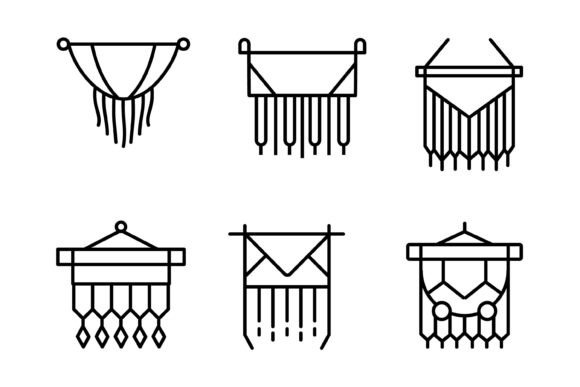
The integration of Decorative Macrame Wall Hangings Textile assets into professional and personal projects represents more than a simple aesthetic choice; it is a strategic decision that impacts design efficiency, brand consistency, and user engagement. For professionals ranging from interior designers and marketing specialists to freelance creators and small business owners, understanding how to leverage these textile illustrations effectively is crucial. This guide explores the practical application of a specific collection: six minimalist line art illustrations depicting various macrame wall hanging designs with fringe and geometric patterns. By examining the preparation, implementation, and long-term utility of these assets across formats like AI, EPS, SVG, PNG, and JPG, we can establish a robust workflow that maximizes value.
Defining the Asset and Its Role in the Design Process
At its core, this collection serves as a versatile visual resource. The term Decorative Macrame Wall Hangings Textile refers not just to the physical craft of knotting cord but, in this digital context, to the stylized representation of that craft. These six vector illustrations capture the essence of bohemian and minimalist interior trends without the visual noise often associated with high-resolution photography. They function as modular components within a broader creative ecosystem.
In a typical project lifecycle, these assets fit primarily into the conceptualization and execution phases. Before a single pixel is rendered for a final deliverable, designers use these vectors to establish mood boards, define color palettes, or sketch out layout structures. Because the designs are minimalist line art, they offer a clean slate that adapts easily to different brand identities. Unlike complex photographs that demand specific lighting conditions and background removal, these vector files allow for immediate manipulation of stroke weight, color, and scale, streamlining the initial planning stage.
Strategic Implementation Across File Formats
A critical aspect of working with this collection is understanding the distinct advantages of each provided file format—AI, EPS, SVG, PNG, and JPG—and deploying them at the right moment in your workflow. Efficiency often hinges on selecting the correct format for the specific task at hand.
- AI and EPS (Vector Source Files): These are your primary working files. Use Adobe Illustrator or compatible vector software to open these when you need to modify the geometry of the macrame knots, extend the fringe length, or alter the pattern density. This is essential during the design iteration phase where client feedback might require subtle adjustments to the artwork. Maintaining the vector integrity ensures that whether the output is a business card or a building-sized banner, the lines remain crisp.
- SVG (Scalable Vector Graphics): For web developers and UI designers, the SVG format is indispensable. It allows the Decorative Macrame Wall Hangings Textile elements to be embedded directly into code, ensuring fast load times and perfect scaling across mobile and desktop devices. You can animate the fringe or change colors via CSS, adding an interactive layer to digital products without increasing file size significantly.
- PNG (Portable Network Graphics): When moving into raster-based environments like Photoshop, Canva, or social media scheduling tools, the PNG format with transparency is your go-to. It eliminates the need for manual background removal, saving valuable time during the assembly phase of marketing materials or blog graphics.
- JPG (Joint Photographic Experts Group): While less flexible due to the lack of transparency, JPGs are useful for quick previews, email attachments, or situations where file size must be kept to an absolute minimum for legacy systems.
Workflow Integration: From Concept to Final Delivery
Integrating these assets smoothly requires a structured approach. Consider a scenario where a content marketer is developing a series of blog posts about sustainable living and home decor. The process begins with preparation. The marketer downloads the full package and organizes the folders by format. This organizational step prevents version control issues later, ensuring that the team always edits the master AI or EPS files rather than a flattened JPG.
During the creation phase, the marketer selects the specific macrame design from the six options that best matches the article's tone. Perhaps one design features tighter geometric patterns suitable for a post about organization, while another with longer, flowing fringe fits a piece on relaxation. Using the vector files, they recolor the lines to match the company's brand guidelines, ensuring consistency across all published materials. This adaptability is a key advantage of using line art over static photography.
Once the design is finalized, the asset moves to the deployment stage. For the website, the SVG version is uploaded to the CMS, optimized for search engines with appropriate alt text describing the "minimalist macrame wall hanging." For social media promotion, the PNG version is placed over a textured background in a graphic design tool, creating eye-catching pins for Pinterest or headers for LinkedIn. This multi-channel approach ensures that the Decorative Macrame Wall Hangings Textile asset works harder, serving multiple purposes from a single source file.
Quality Control and Compatibility Considerations
Maintaining high standards throughout the workflow is non-negotiable. When working with vector illustrations, quality control involves checking path closures and stroke alignments. Before exporting final files, always review the artwork at 100% zoom to ensure no stray anchor points exist, which could cause rendering issues in certain browsers or print setups. Additionally, verify that the geometric patterns align symmetrically if the design intent calls for balance.
Compatibility is another factor, especially in collaborative environments. If you are working with a team of freelancers, ensure everyone has access to software capable of editing AI or EPS files, or agree upon a standard exchange format like SVG. Miscommunication regarding file types can lead to delays, such as a printer requesting a vector file when only a low-resolution JPG was provided. Establishing a clear protocol for file handoffs mitigates these risks.
Furthermore, consider the context in which these images will appear. Minimalist line art thrives in whitespace. Crowding the macrame illustrations with heavy text or busy backgrounds can diminish their impact. Effective visual hierarchy dictates that these elements should complement the content, not compete with it. Use them as framing devices, section dividers, or subtle background textures to enhance readability and aesthetic appeal.
Long-Term Utility and Scalability
The true value of investing in a high-quality collection like this lies in its longevity. Unlike trend-specific photography that may feel dated within a year, minimalist line art possesses a timeless quality. The Decorative Macrame Wall Hangings Textile vectors can be repurposed months or even years later for new campaigns. A design used for a spring product launch can be recolored and resized for a holiday gift guide, providing a high return on investment.
For entrepreneurs and small business owners, this scalability supports brand growth. As your product line expands, these consistent visual elements help reinforce brand recognition. Customers begin to associate the specific style of the macrame illustrations with your brand identity. This consistency builds trust and professionalism, key components of E-E-A-T (Experience, Expertise, Authoritativeness, and Trustworthiness) in the eyes of both users and search engines.
Moreover, these assets facilitate rapid prototyping. When testing new landing pages or email templates, having a library of ready-to-use, editable graphics allows for quick A/B testing of visual layouts. You can swap out different macrame designs from the collection to see which resonates better with your audience, making data-driven decisions faster and more efficiently.
Conclusion: Elevating Projects Through Strategic Asset Management
Incorporating Decorative Macrame Wall Hangings Textile illustrations into your workflow is a practical move that bridges the gap between artistic vision and operational efficiency. By understanding the unique strengths of each file format and adhering to a disciplined process of organization, editing, and deployment, professionals can elevate the quality of their output. Whether you are designing a website, crafting a social media strategy, or printing promotional materials, these six minimalist designs offer the flexibility and precision needed to execute ideas effectively. The result is a cohesive, professional, and visually engaging body of work that stands the test of time and adapts to the evolving needs of your projects.