Integrating Decorative Floral Screen Patterns into Professional Design Workflows
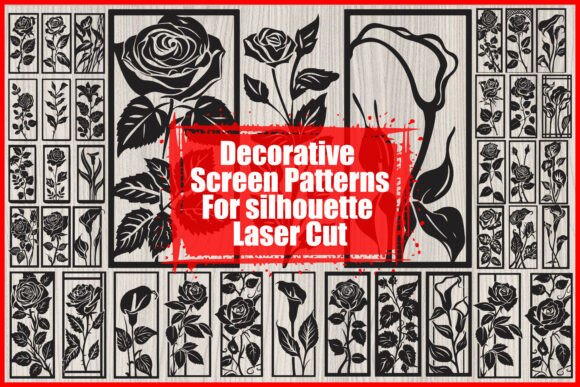
In the realm of architectural design, interior decoration, and custom fabrication, the transition from a conceptual idea to a physical reality often hinges on the quality of digital assets used during the planning phase. Decorative Floral Screen Patterns represent more than just aesthetic embellishments; they are functional components that bridge the gap between creative vision and manufacturing execution. For professionals ranging from architects and interior designers to laser cutting operators and small business owners, understanding how to effectively integrate these patterns into a broader workflow is essential for maintaining efficiency, ensuring structural integrity, and delivering high-quality results.
These vector-based designs serve as the foundational blueprint for creating wall panels, room partitions, metal screens, and wooden decor elements. Unlike raster images, which can lose resolution when scaled, high-quality vector files allow for infinite scalability without compromising the sharpness of the cut lines. This characteristic is critical when adapting a single floral motif to fit various dimensions, from a small cabinet door insert to a large-scale lobby partition. By utilizing standardized file formats such as AI, EPS, SVG, PDF, PNG, and JPG, creators ensure compatibility across a wide spectrum of software and hardware ecosystems.
Strategic Planning and Asset Selection
The integration of Decorative Floral Screen Patterns begins long before the laser cutter is powered on. It starts during the conceptualization and specification phase of a project. When selecting a pattern, one must consider not only the visual appeal but also the structural implications of the design. A dense floral silhouette may offer profound privacy and shadow play, but it requires careful analysis regarding material strength and waste reduction. Conversely, a more open pattern might provide an airy feel but could compromise the rigidity of a large panel if not properly framed.
Professionals should approach asset selection with a checklist that aligns with project requirements. Key factors include the intended material—whether it is mild steel, aluminum, wood, or acrylic—and the specific capabilities of the available cutting machinery. The availability of multiple file formats facilitates this stage significantly. For instance, an architect might use the PDF or JPG versions to present options to a client within a mood board or rendering, while the fabrication team relies on the AI or EPS files for precise toolpath generation. Having access to a comprehensive library that includes 12 distinct variations allows for rapid iteration, enabling designers to test different densities and styles without starting from scratch.
Compatibility and Software Integration
A seamless workflow depends heavily on software compatibility. The modern design environment is heterogeneous; a team might use Adobe Illustrator for vector editing, AutoCAD for architectural drafting, and specialized CAM (Computer-Aided Manufacturing) software for machine control. Decorative Floral Screen Patterns packaged in universal formats like SVG and DXF (often convertible from EPS/AI) ensure that the design data remains intact regardless of the platform.
When importing these vectors, it is crucial to verify line weights and node density. High-fidelity floral details often contain thousands of anchor points. While this ensures smooth curves and intricate petal shapes, it can sometimes overwhelm older cutting controllers or increase processing time unnecessarily. A practical step in the workflow involves opening the source file in a vector editor to simplify paths where possible without losing visual fidelity. This optimization process reduces cut time and minimizes the risk of machine stuttering during complex turns, ultimately improving the finish quality of the final product.
Execution: From Digital File to Physical Object
Once the design is selected and optimized, the focus shifts to the production phase. Here, the interaction between the digital pattern and the physical material dictates the success of the operation. Laser cutting machines, whether CO2 or fiber, require precise instructions regarding power, speed, and frequency. The complexity of floral silhouettes means that the laser head will be making frequent direction changes. Operators must adjust settings to prevent overheating at tight corners, which can lead to burn marks on wood or warping in thin metals.
Nesting is another critical consideration. To maximize material efficiency and reduce costs, multiple screen panels should be arranged on a single sheet of material. The modular nature of many floral patterns allows them to be tiled or mirrored easily. Using the PNG previews included in the package can help visualize the layout before committing to the final nest in CAM software. Efficient nesting not only saves raw material but also reduces machine runtime, directly impacting the profitability of custom fabrication jobs.
Furthermore, the choice of material influences the post-processing workflow. Metal screens may require deburring, powder coating, or patina application to enhance the floral details and protect against corrosion. Wood cuts might need sanding to remove laser char and sealing to preserve the grain. The precision of the initial vector cut determines how much manual labor is required in these finishing stages. Clean, accurate cuts derived from high-quality vector cut files minimize the need for extensive hand-finishing, allowing teams to scale production more effectively.
Quality Control and Consistency
Maintaining consistency across multiple units is vital, especially for large installations involving numerous panels. When producing a series of partitions for a commercial space, even minor deviations in the floral pattern can become glaringly obvious when installed side-by-side. Implementing a rigorous quality control protocol ensures that every piece matches the master design. This involves regular calibration of the laser cutter and periodic verification of the digital files against the physical output.
Documentation plays a key role here. Keeping a record of the specific file version used, along with the machine parameters (power, speed, gas pressure), creates a reproducible recipe for future orders. If a client requests additional panels months later, having this data allows the fabricator to replicate the exact look and feel of the original installation. The organization of assets—keeping the original AI and EPS files separate from edited or nested versions—prevents version control errors that could lead to costly mistakes.
Long-Term Value and Business Applications
Beyond immediate project execution, investing in a robust library of Decorative Floral Screen Patterns offers long-term strategic value for businesses and freelancers. These assets can be repurposed across various revenue streams. An interior designer might license a design for a custom furniture line, while a marketing agency could use the motifs for branded event backdrops. The versatility of the file formats supports this adaptability; high-resolution JPG and PNG files are ready for digital marketing materials, while the vector sources remain available for physical production.
For educators and hobbyists, these patterns serve as excellent learning tools for mastering vector manipulation and understanding the relationship between 2D designs and 3D structures. They provide a safe, pre-tested foundation upon which students can experiment with scaling, modifying, and combining elements to create unique compositions. This accelerates the learning curve, allowing users to focus on creative exploration rather than getting bogged down in the technicalities of drawing complex curves from scratch.
Ultimately, the successful implementation of decorative screens relies on a holistic approach that respects both the artistic intent and the engineering constraints. By treating these patterns as integral components of a structured workflow—rather than isolated graphics—professionals can unlock new levels of creativity and efficiency. Whether transforming a residential wall or outfitting a corporate office, the right combination of high-quality assets, careful planning, and precise execution turns a simple floral silhouette into a lasting element of architectural beauty.
As the demand for customized, aesthetically pleasing environments continues to grow, the ability to rapidly deploy reliable, high-fidelity designs becomes a competitive advantage. Decorative Floral Screen Patterns provide the necessary toolkit to meet this demand, offering a blend of elegance and practicality that fits seamlessly into modern design and fabrication processes. By prioritizing preparation, compatibility, and quality control, creators can ensure that every cut contributes to a flawless final installation.