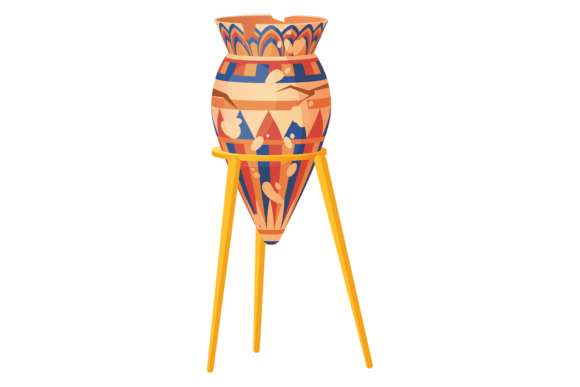
Bringing History to Life with a Decorative Egyptian Vase and Clay Pottery M Icon
There is something undeniably magnetic about ancient aesthetics. Whether you are scrolling through social media, designing a website for a history podcast, or looking for the perfect centerpiece for a themed dinner party, the allure of antiquity never really fades. This is where resources like a Decorative Egyptian Vase combined with a Clay Pottery M icon become incredibly valuable. These aren't just static images; they are versatile design elements that bridge the gap between historical appreciation and modern creative needs.
When we talk about a decorative Egyptian vase in the context of digital assets, we are usually referring to high-quality illustrations or vectors that capture the essence of Nile Valley craftsmanship. Paired with a clay pottery museum icon, these files—often available in EPS, JPG, SVG, and transparent PNG formats—offer a toolkit for anyone needing to evoke a sense of age, culture, and artistry without the hassle of organizing a photoshoot or sculpting physical models.
Why Designers and Creators Reach for Ancient Motifs
The decision to use an Egyptian-themed asset rarely happens by accident. It is usually driven by a specific narrative need. For graphic designers, the silhouette of an amphora or a narrow-necked vessel instantly communicates "history," "preservation," or "luxury." The Clay Pottery M icon, specifically designed to look like a museum exhibit isolated on a white background, serves as a clean, professional shorthand for cultural heritage.
Consider the practical side of file formats. If you are a web developer building a landing page for an archaeology tour company, you need scalability. An SVG version of the vase ensures that whether a user views the site on a massive desktop monitor or a tiny smartphone screen, the lines remain crisp. There is no pixelation, no blurriness. Conversely, a marketer putting together a quick Instagram story might prefer a transparent PNG. This allows them to drop the vase image directly over a photo of sand dunes or a textured wall without worrying about white boxes ruining the composition.
Real-World Applications Across Different Industries
The utility of these assets extends far beyond simple decoration. Let's look at how different professionals might actually apply a Decorative Egyptian Vase and clay pottery icon in their daily work.
Educational Content and E-Learning
Educators and course creators often struggle to make dry historical facts engaging. Imagine you are building an online module about trade routes in the ancient world. Instead of walls of text, you can use the clay pottery icon to represent goods being transported. Because the icon is isolated on a white background, it integrates seamlessly into slide decks, worksheets, or interactive quizzes. It helps visual learners connect the concept of "pottery" with "trade" instantly. Furthermore, using a consistent set of icons (like the "M" series often found in museum collections) gives your educational material a cohesive, branded look that feels authoritative.
Branding for Artisanal and Lifestyle Businesses
Small business owners in the home decor or organic product space frequently lean into earthy, natural aesthetics. A company selling handmade soaps, olive oils, or artisanal bread might use the image of an Egyptian vase on their packaging to suggest timelessness and natural ingredients. The association is subtle but powerful: clay implies earth, and ancient vessels imply methods that have stood the test of time. In this scenario, the JPG format might be sufficient for print labels, while the vector EPS file becomes crucial if they decide to scale up to large storefront signage later.
Digital Marketing and Blogging
Content creators know that breaking up text with relevant imagery keeps readers engaged. A travel blogger writing about a trip to Luxor or Cairo can use these icons as bullet points or section dividers. It adds a thematic flair that standard stock photos sometimes lack. Moreover, because these assets are often stylized rather than hyper-realistic photographs, they don't clash with the blogger's own photography. They complement personal photos rather than competing with them.
Navigating File Formats: What You Need to Know Before Downloading
Not all digital assets are created equal, and choosing the right version of your Decorative Egyptian Vase can save you hours of frustration. Here is a practical breakdown of what to consider based on your intended use:
- SVG (Scalable Vector Graphics): Choose this if you plan to resize the image frequently or use it in web design. You can change the color of the vase directly in code or design software without losing quality. It is ideal for logos and UI elements.
- EPS (Encapsulated PostScript): This is the go-to for professional printers. If you are creating business cards, brochures, or large banners, the EPS file ensures the highest fidelity output. It works best with Adobe Illustrator and similar vector tools.
- PNG (Portable Network Graphics): Look for the "transparent" label. This is essential for layering. If you want to place the vase over a colored background or a complex pattern, a transparent PNG prevents that awkward white square from appearing around the edges.
- JPG (Joint Photographic Experts Group): Best for general use where file size matters more than transparency. Great for email newsletters, social media posts, or documents where the background will remain white.
Avoiding Clichés and Ensuring Cultural Respect
While these icons are fantastic tools, it is important to use them thoughtfully. The "Egyptian" aesthetic is rich and diverse, spanning thousands of years. When selecting a Clay Pottery M icon, pay attention to the details. Does the pattern on the vase match the era you are referencing? While a stylized icon doesn't need to be an archaeological replica, gross inaccuracies can distract knowledgeable audiences.
Additionally, consider the context. Using ancient symbols purely as exotic decoration without understanding their significance can sometimes feel tone-deaf. However, when used to illustrate museums, history lessons, or genuine appreciation for ceramic arts, these assets serve as a respectful nod to human creativity. The "museum icon" style specifically helps here, as it frames the object as an artifact to be studied and admired, rather than just a random prop.
Making the Most of Your Creative Assets
Ultimately, the value of a Decorative Egyptian Vase and clay pottery illustration lies in its flexibility. It is a chameleon in your design library. One day it might be the hero image on a history blog; the next, it could be a subtle watermark on a certificate of authenticity for a vintage shop. By understanding the strengths of each file format and aligning the imagery with your specific narrative goals, you transform a simple download into a strategic component of your project.
Whether you are a freelancer pitching a new brand identity or a hobbyist digitizing your family history archive, having access to high-quality, isolated icons allows you to focus on storytelling. You don't have to worry about the technical hurdles of image editing or the cost of custom illustration. Instead, you can spend your energy on what matters: connecting your audience with the timeless beauty of ancient craftsmanship through a modern lens.